+91 92183 04049 Service@mindsphereinstitute.com Mon - Sat: 8:00 AM - 6:00 PM
Admissions Open 2026
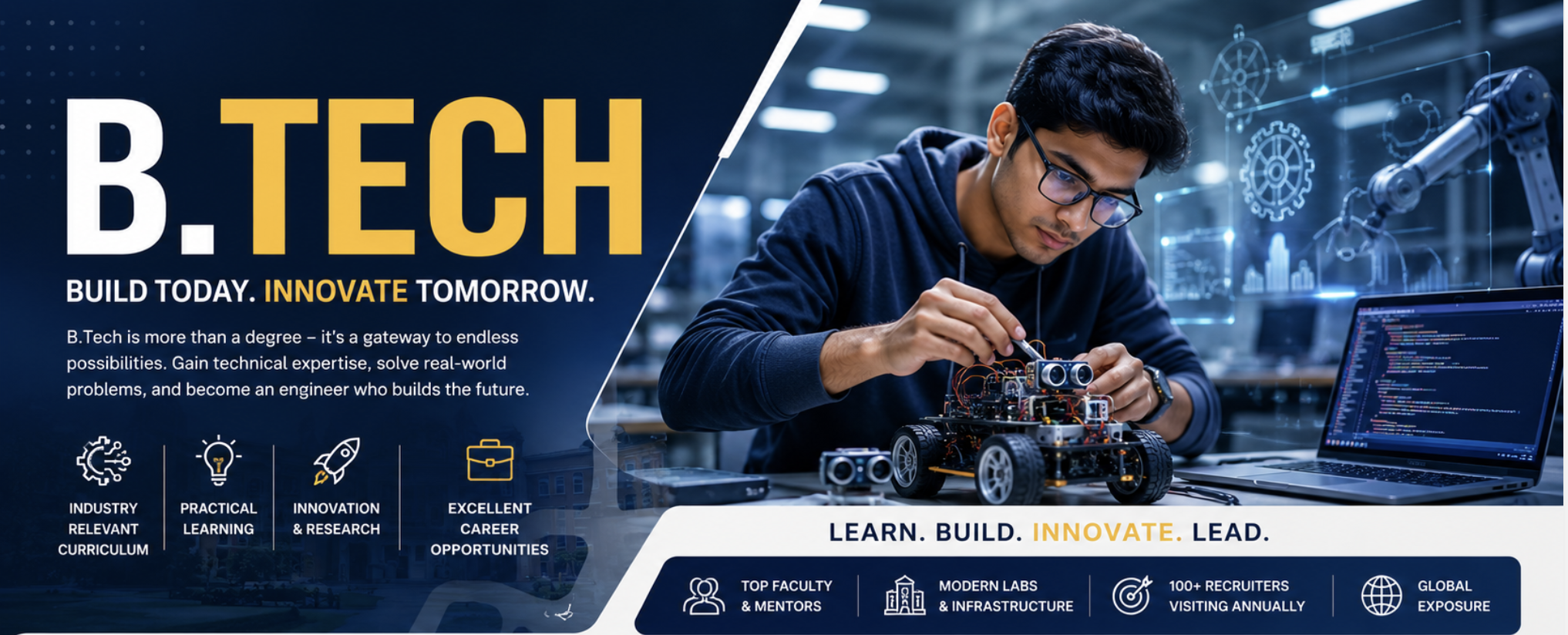
B.Tech Programs Designed for Future Engineers
Explore industry-focused engineering programs with practical learning, modern labs, internships, and career-focused academic support.
12+
B.Tech Specializations
Modern Engineering Labs
Industry-Oriented Curriculum
Internship Guidance
Career Preparation
Program Highlights
B.Tech Learning Experience At A Glance
Explore key academic features designed to support practical learning, technical growth, and career-focused engineering education.
12+
Specializations
25+
Industry Labs
100+
Faculty & Mentors
4+
Years Program
8+
Semesters
20+
Skill Modules
Why Choose B.Tech?
Build A Strong Foundation For Your Engineering Career
B.Tech programs combine academic learning, practical exposure, and professional development to prepare students for diverse career paths.
Strong Technical Foundation
Build a deep understanding of engineering principles, programming, analytical thinking, and problem-solving skills.
Industry Exposure
Learn through workshops, seminars, industrial visits, and practical projects aligned with current industry practices.
Internship Opportunities
Gain hands-on experience through internships that help bridge classroom learning and professional work.
Placement Preparation
Enhance aptitude, communication, interview readiness, and career development through structured guidance.
Engineering Programs
Available B.Tech Specializations
Choose from industry-relevant engineering programs designed to build technical expertise, practical skills, and future-ready careers.
01
Computer Science Engineering (CSE)
Duration: 4 Years
Seats: Limited Intake
Covers programming, software development, operating systems, databases, cloud computing, networking, and emerging technologies.
Software Developer
Full Stack Engineer
Cloud Engineer
System Analyst
02
Artificial Intelligence & Machine Learning
Duration: 4 Years
Seats: Limited Intake
Learn intelligent systems, machine learning models, deep learning, neural networks, and AI-driven applications.
AI Engineer
ML Engineer
Data Analyst
Research Associate
03
Electronics & Communication Engineering
Duration: 4 Years
Seats: Limited Intake
Focuses on communication systems, embedded systems, electronics, signal processing, and telecommunications.
Telecom Engineer
Embedded Engineer
Network Engineer
04
Electrical Engineering
Duration: 4 Years
Seats: Limited Intake
Study power systems, electrical machines, renewable energy, automation, and industrial applications.
Electrical Engineer
Power Systems Engineer
Maintenance Engineer
05
Mechanical Engineering
Duration: 4 Years
Seats: Limited Intake
Covers manufacturing, thermal engineering, machine design, robotics, and industrial systems.
Design Engineer
Production Engineer
Automation Engineer
06
Civil Engineering
Duration: 4 Years
Seats: Limited Intake
Learn structural design, construction management, transportation engineering, and infrastructure development.
Site Engineer
Structural Engineer
Project Engineer
07
Cyber Security
Duration: 4 Years
Seats: Limited Intake
Focuses on ethical hacking, network security, digital forensics, and information protection.
Cyber Security Analyst
Ethical Hacker
Security Consultant
08
Data Science
Duration: 4 Years
Seats: Limited Intake
Learn data analysis, visualization, machine learning, statistics, and business intelligence.
Data Scientist
Business Analyst
Data Engineer
09
Biotechnology
Duration: 4 Years
Seats: Limited Intake
Combines biology and technology for healthcare, pharmaceuticals, agriculture, and research.
Biotech Analyst
Research Scientist
Quality Specialist
10
Robotics & Automation
Duration: 4 Years
Seats: Limited Intake
Covers robotic systems, automation technologies, sensors, control systems, and smart manufacturing.
Robotics Engineer
Automation Engineer
Control Engineer
11
Environmental Engineering
Duration: 4 Years
Seats: Limited Intake
Focuses on sustainability, pollution control, water resources, and environmental management.
Environmental Consultant
Water Engineer
Sustainability Specialist
12
Computer Science & Design
Duration: 4 Years
Seats: Limited Intake
Integrates computer science with user experience, interface design, and digital product development.
UI/UX Designer
Product Designer
Frontend Developer
Program Highlights
Four-Year B.Tech Academic Journey
A structured learning path designed to help students move from engineering fundamentals to specialization, practical exposure, and career readiness.
Year 1
Engineering Fundamentals
Build a strong base in mathematics, science, programming, communication, and basic engineering concepts.
Year 2
Core Subjects & Labs
Study branch-specific subjects with practical lab sessions, experiments, assignments, and technical skill development.
Year 3
Industry Projects & Internships
Work on real-world projects, internships, workshops, and industry-focused learning to gain practical exposure.
Year 4
Specialization & Placements
Focus on advanced specialization subjects, final-year projects, interview preparation, and placement readiness.
Career Opportunities
Career Paths After B.Tech
B.Tech graduates can explore diverse career options across technology, engineering, research, manufacturing, infrastructure, and innovation-driven industries.
Software Engineer
Build web apps, mobile apps, software systems, and digital products.
Data Scientist
Analyze data, create insights, and work with machine learning models.
AI Engineer
Develop AI-based systems, automation tools, and intelligent applications.
Cyber Security Analyst
Protect networks, applications, systems, and data from digital threats.
Mechanical Engineer
Work in design, machines, manufacturing, production, and industrial systems.
Civil Engineer
Plan and manage construction, infrastructure, buildings, and smart city projects.
Electronics Engineer
Work with circuits, embedded systems, communication, IoT, and electronic devices.
Robotics Engineer
Design robotics systems, automation solutions, sensors, and smart machines.
Eligibility Criteria
B.Tech Admission Eligibility
Check the basic academic and entrance requirements for admission into B.Tech programs.
Eligibility
10+2 with Physics, Chemistry, and Mathematics from a recognized board.
Minimum Percentage
Minimum required percentage as per university or admission guidelines.
Entrance Accepted
JEE / CET scores may be accepted depending on admission rules.
Lateral Entry
Lateral entry option may be available for eligible diploma holders.
Free Expert Guidance
Start Your Distance Learning Journey
Confused about courses, universities, fees, or eligibility? Talk to our counselors and get clear guidance before applying.
✔ Course & University Guidance
✔ Eligibility & Fee Details
✔ Admission Process Support
✔ Online & Distance Learning Help
Get Free Counselling
Fill your details and our counselor will contact you shortly.